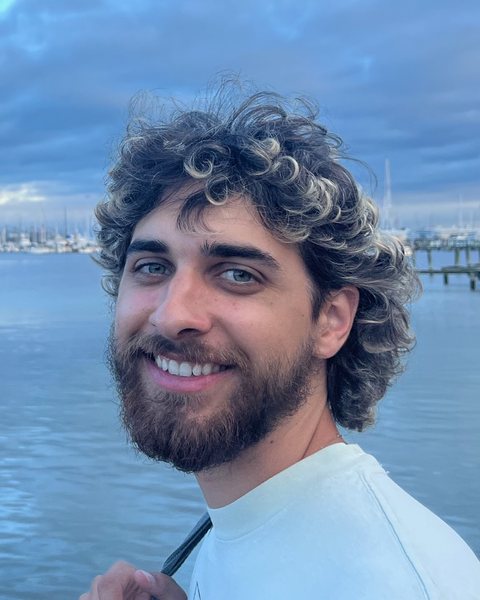
Charley Sanchez
PhD student, Computer Science
University of Maryland, Baltimore County
I'm a PhD student at UMBC, where I work with Prof. Dong Li in the Future Sensing and Interaction (FSI) Lab. I study the security of foundation models for physiological signals such as EEG, ECG, and wearable data. My current work examines how multimodal health models respond to realistic sensor faults and attacks, and how their design choices shape the damage.
Before UMBC, I worked on mental health modeling from wearable data with Prof. Anind K. Dey at Georgia Tech, causal machine learning with Prof. Wenbo Wu at Johns Hopkins, and privacy-preserving perception with Prof. Nader Sehatbakhsh at UCLA, where I did my M.Eng. I have a B.S. in Physics from UCSB, and after graduating I worked in a clinical diagnostic lab, which is a big part of why I ended up in healthcare ML.
News
- Aug 2026Started my PhD in Computer Science at UMBC, working with Prof. Dong Li in the FSI Lab.
- 2026Wrapped up a project on mental health modeling from wearable data in Prof. Anind K. Dey’s lab at Georgia Tech.
- 2026Built a self-hosted LLM system for Econ One Research as a contracted consultant.
- 2025Finished my M.Eng. at UCLA and joined Prof. Wenbo Wu’s lab at Johns Hopkins to work on double machine learning.
Research
Robustness of multimodal physiological foundation models
Foundation models trained on large collections of biosignals, such as EEG, ECG, EOG, and EMG, are increasingly proposed for clinical and wearable health monitoring. These systems combine several sensors, so an attacker, or simply a faulty electrode, can target a single input stream rather than the whole model. My research builds a threat-model-driven evaluation of these systems: realistic attacks defined at the level of the physical signal, applied consistently across models with different architectures, and measured with statistically careful, subject-level evaluation. The goal is to understand which design decisions make multimodal health models fragile or resilient, and what that means for deploying them safely.
AI for mental health
I built modeling pipelines for mental health assessment from wearable and behavioral time-series data. I investigated encoding the time series as images (Markov Transition Fields and Gramian Angular Fields) so convolutional and multimodal models could learn from them, and designed a gradient-boosted feature selection step to keep CNN training focused when data was limited. I finished the project and handed off the codebase and documentation to the next research cohort.
Causal machine learning
Double machine learning estimates treatment effects by first fitting flexible “nuisance” models, and I studied how the choice of deep architecture for those models (ResMLP, DCN, Transformers) affects the bias, variance, and stability of multi-treatment effect estimates. Across 500–2,000+ configurations, residual MLP blocks introduced the least covariate distortion, and a better-designed gamma model recovered true treatment effects 10–22% more accurately in nonlinear synthetic settings. I also started a literature review on cost-supervised embeddings of diagnosis codes (ICD/CPT) for estimating patient costs in Medicare Advantage plans.
Privacy-preserving perception
In the Secure Systems and Architectures Lab, I worked on real-time face anonymization for camera-equipped robots, with Nokia Bell Labs as an industry partner. On a Jetson Orin Nano, I designed mosaic and noise-based anonymization that cut compute by over 92% while keeping the visual signal navigation depends on, and built the evaluation pipeline against Segment Anything masks. This work led to the Argus manuscript below.
Papers and reports
- Argus: Real-Time Privacy-Preserving Video Streaming for Delivery Robots Manuscript in preparation
- PAVAC: Privacy-Aware Vehicular Autonomous Computation Technical report, UCLA, 2025 [pdf] [code] [video]
- Bridging the Generalization Gap in sEMG Keystroke Recognition with LSTM-Based Architectures Technical report, UCLA, 2025 [pdf] [code]
- Spurious Correlation Detection in Natural Language Processing Technical report, UCLA, 2024 [pdf] [code]
Projects
-
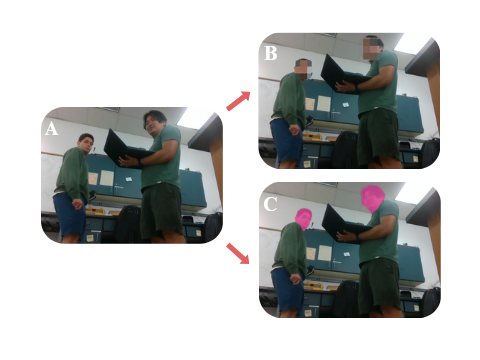
PAVAC, privacy-aware perception on a rover
Real-time face anonymization on a Jetson Orin Nano using SCRFD and TensorRT, built into a physical rover stack. Mosaic and noise-based anonymization cut compute by over 92%, with about 41 ms end-to-end latency.
-

Audit-aware RAG on AWS Bedrock
A retrieval-augmented generation pipeline using Titan embeddings and Claude, with strict JSON outputs, a human review gate, and JSONL audit logs with trace IDs.
-
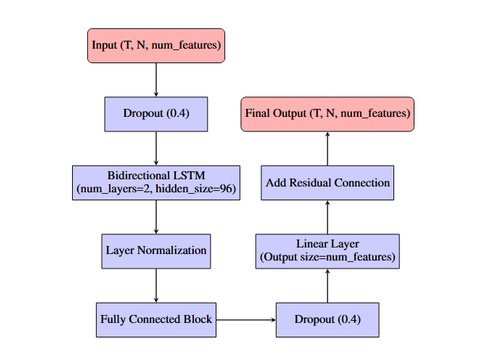
sEMG keystroke recognition
A bidirectional LSTM with residual connections for decoding typing from wrist sEMG on EMG2QWERTY (346 hours, 108 users). Cut character error rate by 12% over the baseline.
-
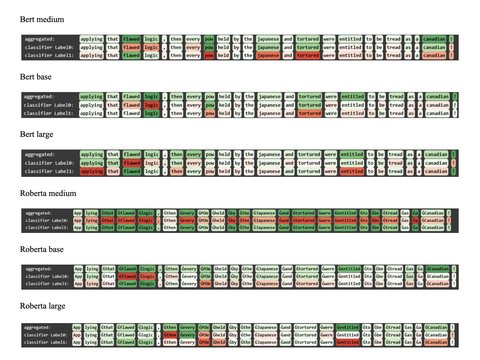
Spurious features in pretrained encoders
Used DecompX to measure how much BERT and RoBERTa rely on spurious tokens, and evaluated counterfactual augmentation and sequence-length limits for robustness.
-
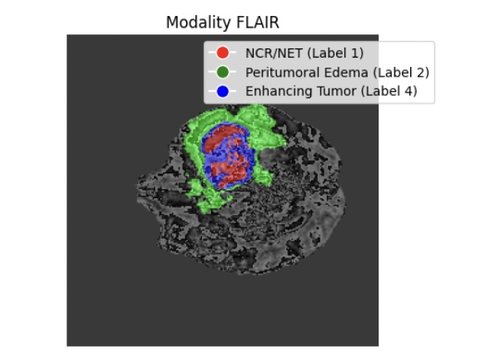
Brain tumor segmentation (BraTS 2020)
Segmenting tumor core, edema, and enhancing tumor from T1, T1Gd, T2, and FLAIR MRI.
-
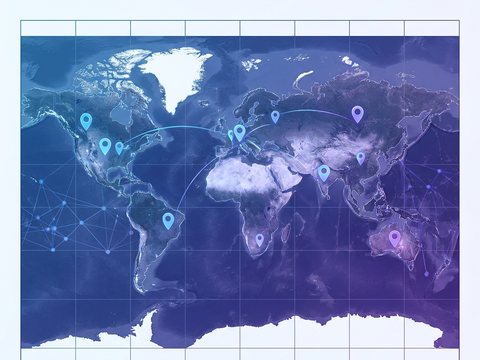
GeoBot, image geolocation
A training pipeline for predicting where a photo was taken, with a Haversine loss, YAML configs, W&B tracking, and a Gradio demo.
Experience
-
2026
Graduate Researcher, Georgia Institute of Technology
Prof. Anind K. Dey's lab. Mental health assessment from wearable and behavioral time-series data. -
2026
Contracted Software Consultant, Econ One Research
Designed and deployed a self-hosted LLM system so the firm's expert witness work on antitrust cases could use LLMs without sending data to outside APIs. Served Qwen and Gemma models with vLLM, LiteLLM, and Open WebUI in Docker. -
2025–2026
Research Volunteer, Johns Hopkins University
Prof. Wenbo Wu's lab. Double machine learning with deep nuisance models. -
2025
Graduate Researcher, UCLA
Secure Systems and Architectures Lab, Prof. Nader Sehatbakhsh. Privacy-preserving perception on embedded hardware. -
2024
Software Engineer, Econ One Research
Built a PostgreSQL document system for litigation discovery data (about 40% faster queries) and a multithreaded ingestion pipeline with 3x the throughput. -
2023–2024
Lab Assistant, Pacific Diagnostic Laboratories
Processed 500+ specimens a day and tracked orders and results in Epic. This is where I first saw how much software choices affect patient care.
Education
-
2026–
Ph.D., Computer Science, University of Maryland, Baltimore County
-
2025
M.Eng., Artificial Intelligence, UCLA
UCLA M.Eng. Fellowship (2024). -
2023
B.S., Physics, UC Santa Barbara